
These are words that we’ve probably all misused at some point in our lives (even if we don’t admit it). They’re the words that we read 17 times while we’re proofing our work before we catch the error. Review the below just to make sure you’re not caught using the wrong word when it really matters.
Accept / Except
If you need some more clarification on this one, check out the previous blog about these particular homophones. These two words are always at the top of the list so they are worth mentioning twice.
Accept: Receive or Include
Except: Apart From or Excluding

Advice / Advise
Advise is one of those words that spell-check may not recognize. However, it is a word and it does not have the same meaning as “advice.”
Advice: Guidance or Direction
Advise: Recommend

Assent / Ascent
Assent: Acceptance or Agreement
Ascent: Climbing Up or Rising

Bare / Bear
Bare: Uncovered
Bear: To Carry; The Furry Mammal

Brake / Break
Brake: A Device for Stopping
Break: To Separate; A Pause

Coarse / Course
Coarse: Rough or Uneven
Course: Passage; Subject of Learning

Complement / Compliment
Complement: Accompaniment or Match
Compliment: Praise or Accolade

Ensure / Insure
This is another one that merits mentioning twice. For more detailed information, check out the Assure, Insure or Ensure? blog.
Ensure: Certify or Guarantee
Insure: To Cover or Protect (Financially)

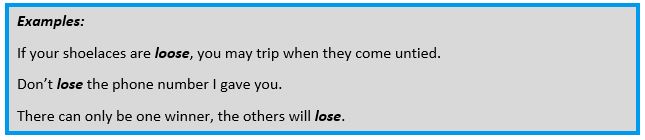
Loose / Lose
Loose: Moveable or Unfastened
Lose: To Misplace; To Fail
Stationary / Stationery
Stationary: Motionless or Static
Stationery: Writing Materials

These are only a few of the most commonly confused words in the English language. Reach out to Unscripted for guidance as you navigate through writing, reading or speaking English.

 Unscripted, LLC